The Problem with Most Homemade Tomato Sauce
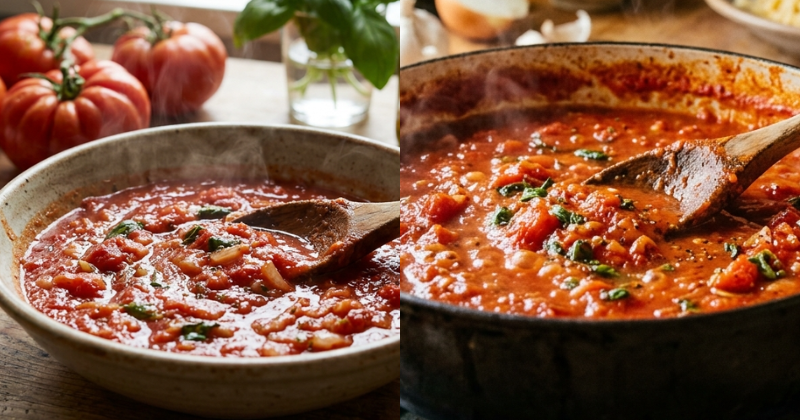
Most homemade tomato sauce is either metallic, watery, or tastes like warmed-up canned soup. People try to fix bland sauce by dumping in dried oregano or simmering it for six hours, but they still end up with a bitter, acidic mess that pools at the bottom of the pasta bowl.
The primary failure happens during the initial heat application. Home cooks regularly scorch their garlic, use low-quality canned tomatoes, or dump all their ingredients into a cold pot at once. This creates an un-emulsified liquid where the water separates from the tomato solids.
Through years of recipe development, I discovered 7 Genius Tomato Sauce Recipes for a True Italian Dinner, and they all share one foundational rule: success relies on controlled fat-soluble flavor extraction. To fix the common watery trap, you must fundamentally change how you treat the fat and the tomato structure at the beginning of the cook. This guide breaks down the ultimate baseline sauce that outperforms standard recipes by treating tomatoes like science, not guesswork.
The « Hero » Technique: The High-Fat Cold Emulsion
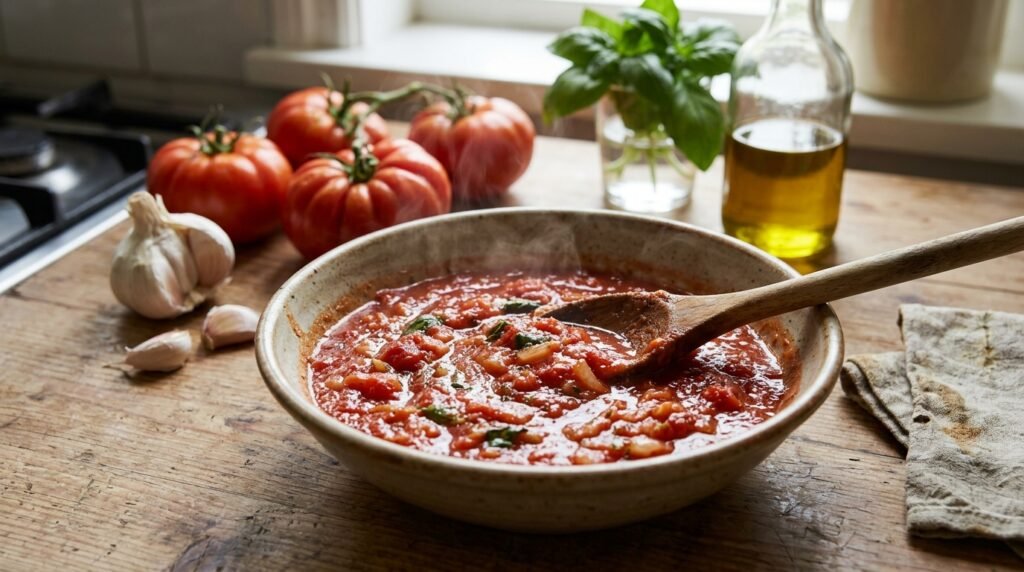
The secret to a rich sauce that clings to pasta without separating is the High-Fat Cold Emulsion method.
Standard recipes tell you to heat olive oil, sauté onions and garlic until brown, and then pour in crushed tomatoes. This is a mistake. High heat scorches the garlic, turning it bitter, and flashes off the delicate volatile compounds in high-quality olive oil.
Instead, start with cold fat in a cold pan. Combine your aromatics with a generous amount of extra virgin olive oil before turning on the flame. By bringing the temperature up slowly over medium-low heat, you sweat the aromatics and infuse the oil with fat-soluble flavor compounds without burning them.
Once the tomatoes are added, this infused fat creates a stable emulsion with the tomato serum (the watery liquid inside the fruit), thickening the sauce naturally without needing hours of reduction or artificial thickeners like cornstarch or tomato paste.
Ingredient Deep Dive
+------------------------+---------------------------------------+------------------------------------------+
| Ingredient             | Specification                         | Purpose                                  |
+------------------------+---------------------------------------+------------------------------------------+
| Whole Peeled Tomatoes  | San Marzano D.O.P. (e.g., Cento)      | Low acidity, thick flesh, sweet profile  |
| Extra Virgin Olive Oil | Cold-pressed Italian (California Olive| Flavor carrier and emulsification base   |
|                        | Ranch is a reliable alternative)      |                                          |
| Garlic                 | Fresh whole cloves, smashed           | Clean aromatic base without sharp burn   |
| Sea Salt               | Fine Sicilian sea salt                | Mineral-rich flavor enhancement          |
| Fresh Basil            | Whole sprigs with stems               | Herbaceous finish without turning black   |
+------------------------+---------------------------------------+------------------------------------------+
San Marzano D.O.P. Tomatoes
Do not buy pre-crushed or diced tomatoes. Diced tomatoes are treated with calcium chloride to help them hold their shape, meaning they will not break down smoothly in your sauce. Whole peeled San Marzano tomatoes grow in volcanic soil, which naturally lowers their acidity and provides a sweeter flavor profile.
Extra Virgin Olive Oil
Use oil that has a peppery finish. The fat is not just for greasing the pan; it represents a core flavor component. You need a high-quality oil because it coats the tongue and balances the natural malic and citric acids present in the fruit.
The Walkthrough
Phase 1: The Cold Aromatic Infusion
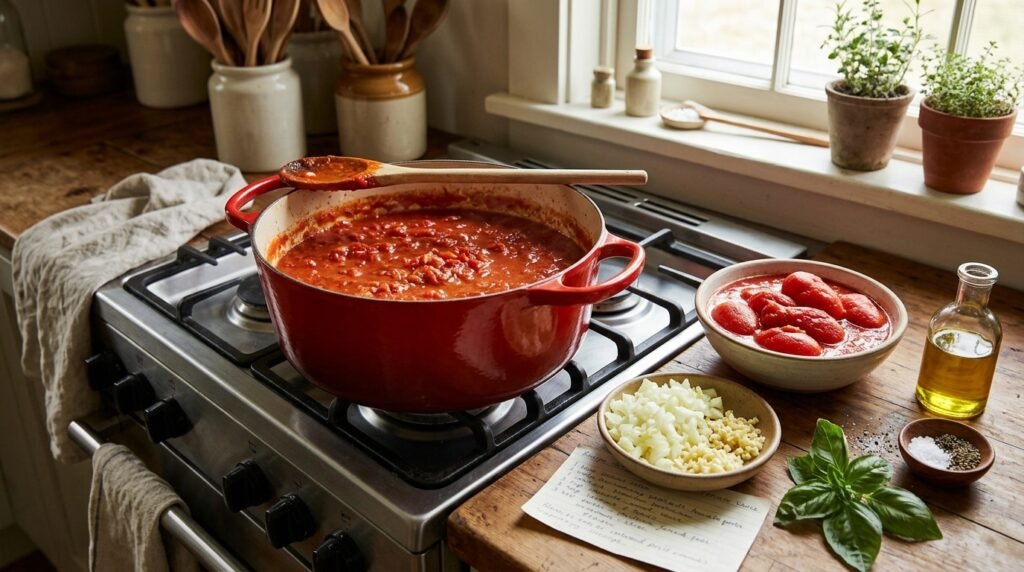
- Pour 1/3 cup of extra virgin olive oil into a cold, heavy-bottomed stainless steel saucier or Dutch oven.
- Add 4 large, smashed cloves of fresh garlic to the cold oil.
- Turn the heat to medium-low. Watch for the first signs of activity.
Visual Cue: Look for tiny, tight bubbles forming gently around the edges of the garlic cloves. If the garlic begins to turn brown or dances rapidly in the pan, immediately pull the pan off the heat source to cool it down.
Pro-Tip: Smashed cloves impart a mellow garlic flavor. Crushed or minced garlic releases too much allicin, creating a harsh, pungent bite that overpowers the tomatoes.
Phase 2: The Hand-Crush and Sizzling Stage
- Open your two 28-ounce cans of San Marzano tomatoes.
- Pour them into a large bowl and use your bare hands to crush each tomato down into a coarse pulp. Remove any tough yellow cores or leftover skin pieces.
- Once the garlic in the pan is pale golden and fragrant, pour the hand-crushed tomatoes into the pot all at once.
Visual Cue: The mixture should hiss loudly as the water from the tomatoes hits the hot oil. The oil will immediately rise to the top in a distinct, bright orange layer.
Pro-Tip: Do not use a blender to puree the tomatoes. Blenders introduce oxygen into the mixture, which shears the tomato seeds and oxidizes the pigments, turning your sauce an unappealing shade of orange-pink instead of deep crimson.
Phase 3: The Rapid Simmer and Emulsion
- Bring the sauce to a boil over medium-high heat, then immediately drop the flame down to keep it at a steady, active simmer.
- Add 1 teaspoon of fine sea salt.
- Do not cover the pot with a lid. Stir the mixture every 5 minutes with a wooden spoon, scraping the bottom corners of the pot to prevent scorching.
Visual Cue: Watch for the bright orange oil to slowly disappear back into the red tomato liquid. The sauce is emulsified when you pull a wooden spoon through the center of the pan and it leaves a clean track that takes two full seconds to close.
Pro-Tip: Simmer rapidly for exactly 25 to 30 minutes. Long cooking times destroy the fresh fruit flavors and cook out the bright acidity that makes a true Italian sauce pop.
Phase 4: The Finish
- Turn off the heat completely.
- Toss 4 whole sprigs of fresh basil directly onto the top of the hot sauce.
- Push the leaves down into the liquid so they are completely submerged.
- Let the sauce sit undisturbed for 10 minutes before serving.
Visual Cue: The basil leaves will wilt instantly and turn a deep dark green. The surface of the sauce will look glossy and uniform.
Troubleshooting Table
| What Went Wrong | Why It Happened | How to Fix It Next Time |
| The sauce is thin and pools water at the bottom of the plate. | The sauce did not simmer fast enough to break down the tomato walls, or it lacked sufficient olive oil to form an emulsion. | Increase the simmer heat slightly. Ensure you use the full 1/3 cup of extra virgin olive oil to bind the liquids. |
| The sauce tastes bitter or metallic. | The garlic was scorched during the infusion phase, or you used cheap canned tomatoes packed in heavy citric acid. | Start with a completely cold pan for the garlic. If using sub-optimal tomatoes, add a pinch of baking soda (not sugar) to neutralize the acid. |
| The texture is grainy and chunky. | You used diced canned tomatoes instead of whole peeled varieties. | Only buy whole peeled tomatoes. Hand-crush them before cooking to ensure an uneven, rustic texture that holds onto pasta. |
Storage & Reheating
Storage Protocols
Never store hot tomato sauce in plastic containers. The residual heat will cause the plastic to leach chemicals and stain the container permanently.
- Cooling: Allow the sauce to drop to room temperature within two hours of cooking.
- Vessel: Transfer the cooled sauce into clean glass Mason jars or airtight glass containers.
- Refrigeration: Store in the refrigerator for up to 4 days.
- Freezing: Leave a 1-inch headspace at the top of glass jars to allow for expansion. Store in the freezer for up to 6 months.
Reheating Instructions
Do not use a microwave to reheat this sauce. The microwave heats unevenly and breaks the delicate oil emulsion, leaving you with a greasy top layer.
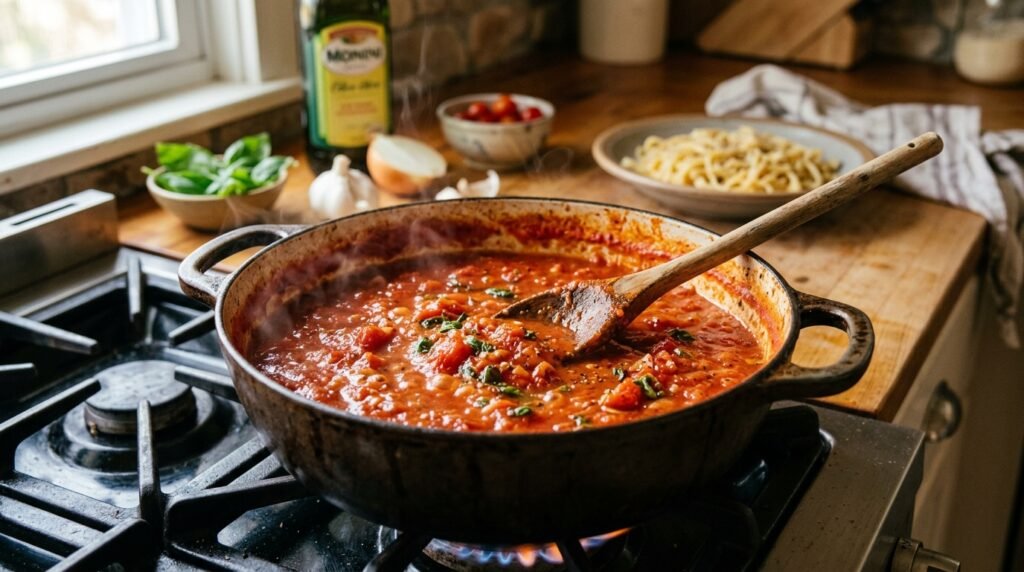
- From Refrigerated: Pour the sauce into a cold skillet. Turn the heat to medium-low and stir constantly for 5 to 7 minutes until bubbles form uniformly across the surface.
- From Frozen: Thaw the glass jar overnight in the refrigerator. Never place a frozen glass container directly into hot water or a hot pan, or the glass will shatter from thermal shock.
Recipe Card Summary
Core Specifications
- Prep Time: 15 minutes
- Cook Time: 30 minutes
- Total Time: 45 minutes
- Yield: 4 cups (Serves 4–6)
Required Equipment
- Stainless steel saucier or 4-quart Dutch oven (Avoid reactive aluminum pans, which leach a metallic taste when exposed to acidic tomatoes)
- Large mixing bowl
- Wooden spoon
- Measuring spoons and liquid measuring cups