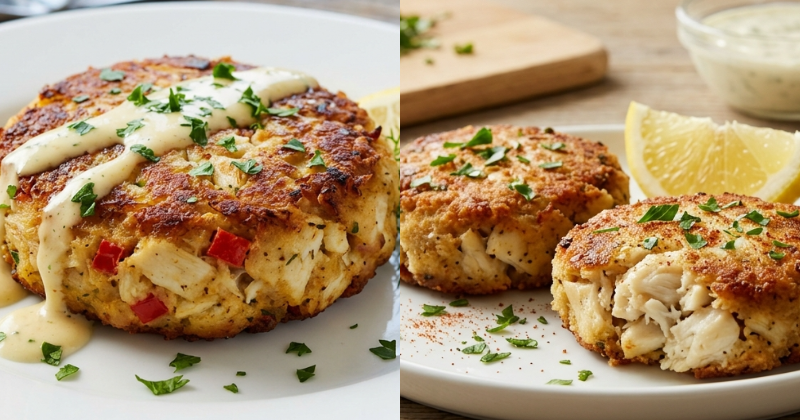
The Secret to Crab Cakes That Don’t Fall Apart
Most homemade crab cakes are a disappointment. They either arrive at the table as a soggy, bready mess or crumble into a pile of loose meat the second your fork touches them. The « breading-to-crab » ratio is usually the culprit. Restaurants often overcompensate with cheap fillers like crushed saltines or heavy flour to stretch their profit margins, resulting in a texture that feels more like a hushpuppy than a seafood delicacy.
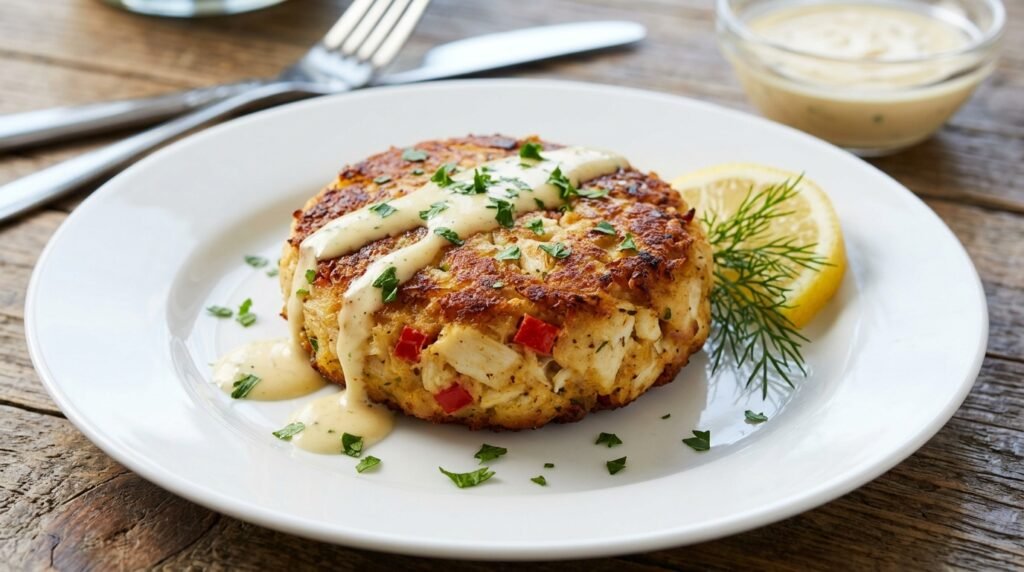
I recently decided to fix this. I tried this crab cake recipe for my family and they’re obsessed. My goal was simple: maximum crab, minimum binder, and a crust that actually stays crispy. I made the classic mistake of using jumbo lump crab with too much liquid in the mix during my first attempt, which led to a structural disaster. Through trial and error, I discovered that the problem isn’t the ingredients themselves—it’s how you handle the moisture. This recipe solves the « soggy bottom » syndrome and ensures every bite is packed with sweet, clean coastal flavor.
The « Hero » Technique: The Cold-Set Rest
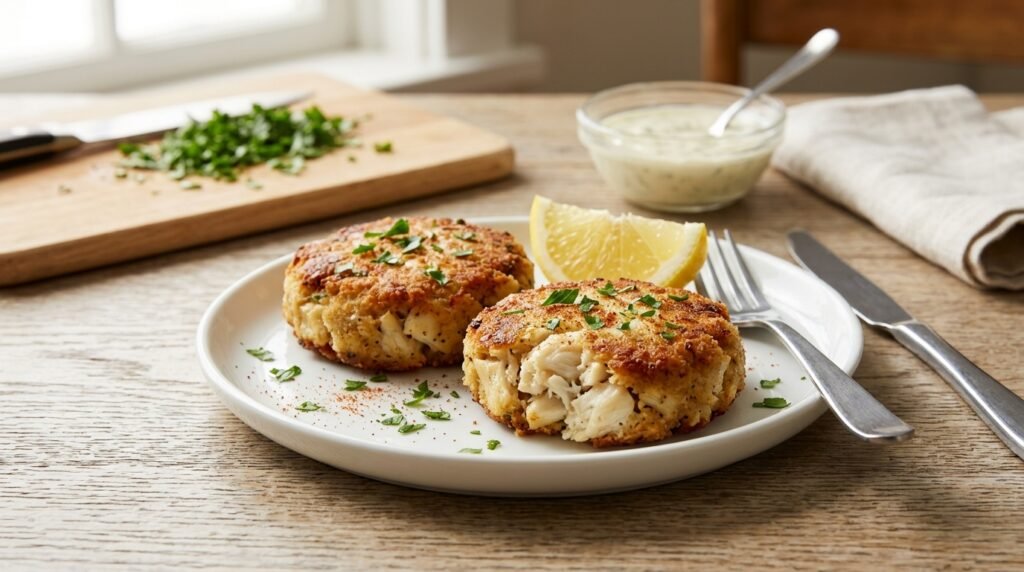
The secret to a perfect crab cake isn’t a special spice or a secret sauce; it’s patience and temperature. To beat the top results you see online, we use the Cold-Set Rest method.
Most recipes tell you to form the patties and drop them straight into the pan. This is a mistake. When you mix crab with a binder (even a minimal one), the proteins and starches need time to hydrate and bond. By refrigerating the formed cakes for at least 30 minutes before hitting the heat, the fats in the binder solidify. This creates a structural integrity that allows you to use significantly less filler. When that cold cake hits the hot oil, the exterior sears instantly, locking the moisture inside while the « glue » holds firm. You get a cake that is 90% crab and 10% magic.
Ingredient Deep Dive: Choosing Your Components
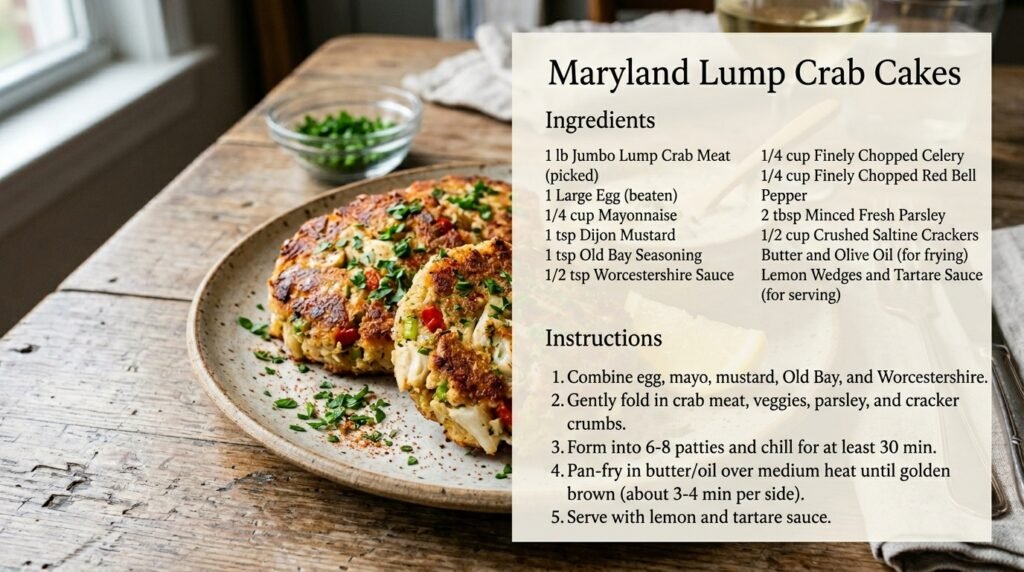
If you spend money on high-end seafood, don’t ruin it with subpar pantry staples.
- Fresh Lump Crab Meat: Do not buy the « claw meat » in a can from the tuna aisle. Go to the seafood counter and look for refrigerated lump or jumbo lump crab. Claw meat is too shredded and muddy-tasting for a primary cake; you want those distinct, sweet chunks.
- Old Bay Seasoning: This is non-negotiable. It provides the celery salt and paprika backbone that defines the mid-Atlantic style.
- Panko Breadcrumbs: Specifically, use Kikkoman Panko. Standard breadcrumbs are too fine and turn into paste. Panko has a larger surface area, which provides the necessary « loft » and crunch.
- Duke’s Mayonnaise: Use Duke’s or Hellmann’s. Avoid « Salad Dressing » spreads or Miracle Whip, which contain too much sugar and will cause the cakes to burn in the pan before they cook through.
- Dijon Mustard: We use Grey Poupon for its sharp, vinegary bite. It cuts through the richness of the mayo and crab fat.
- Fresh Parsley: Flat-leaf Italian parsley only. Curly parsley tastes like grass and adds a tough texture you don’t want here.
The Walkthrough: Step-by-Step
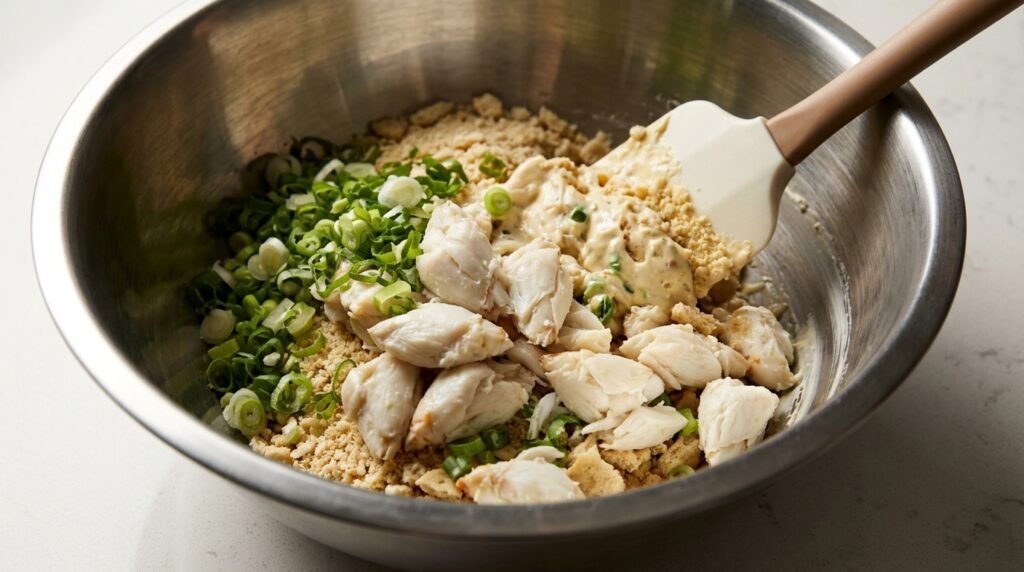
Phase 1: The Gentle Mix
The most important rule: Do not break the lumps. You paid for jumbo lump crab; treat it with respect.
- In a large bowl, whisk together 1/4 cup mayo, 1 egg, 1 tsp Dijon mustard, 1 tsp Old Bay, and 1 tbsp chopped parsley.
- Fold in 1/2 cup Panko breadcrumbs.
- Pour the crab meat over the wet mixture. Using a rubber spatula or your clean hands, fold the mixture together like you are folding egg whites into a cake batter. Stop the second everything is lightly coated.
Pro-Tip: Spread the crab meat out on a baking sheet first and pick through it for shells. It’s much easier to find them when the meat isn’t covered in sauce.
Phase 2: The Form and Chill
- Line a plate with parchment paper.
- Use a 1/2-cup measuring cup to portion the cakes. Do not press them into tight hockey pucks. You want them just barely holding together.
- Place the plate in the fridge for 30 to 60 minutes. Do not skip this.
Pro-Tip: If the mixture feels too wet to even form a loose mound, add one extra tablespoon of Panko, but wait 5 minutes for it to absorb the moisture before adding more.
Phase 3: The Precision Sear
- Heat a cast-iron or heavy stainless steel skillet over medium-high heat.
- Add 2 tablespoons of neutral oil (like grapeseed or avocado oil) and 1 tablespoon of unsalted butter.
- When the butter stops foaming, carefully place the cold cakes in the pan. Do not crowd them.
- Sear for 4 minutes. Look for a deep golden-brown ring forming at the base.
- Flip once. Sear for another 3-4 minutes.
Pro-Tip: Use a fish spatula (a thin, flexible metal spatula) to flip. Standard plastic spatulas are too thick and will break the delicate edges.
Troubleshooting Table
| What Went Wrong | How to Fix It Next Time |
| Cakes fell apart in the pan | You likely skipped the 30-minute fridge rest or didn’t drain the crab meat enough. |
| Outside is burnt, inside is cold | Your heat is too high. Use medium heat and let the butter/oil mixture do the work slowly. |
| Tastes « bready » or dry | You used too many breadcrumbs. Stick to 1/2 cup per pound of crab. |
| Oily or greasy texture | The oil wasn’t hot enough when you added the cakes. It should shimmer before you start. |
Storage & Reheating
- To Store: Place leftover cakes in a single layer in an airtight glass container. Do not stack them, or the moisture from the bottom cake will make the top one soggy. They stay fresh for up to 2 days.
- To Reheat: Never use a microwave; it turns crab into rubber. Instead, place them on a wire rack over a baking sheet and heat in a 350°F oven for 8-10 minutes. The wire rack allows hot air to circulate under the cake, crisping the bottom without you having to flip it.
Recipe Card Summary
- Prep Time: 15 minutes
- Chill Time: 30 minutes
- Cook Time: 8 minutes
- Yield: 6 large crab cakes
- Equipment Needed: Large mixing bowl, Cast-iron skillet, Fish spatula, Parchment paper.
Final Note: Serve these with a simple squeeze of fresh lemon. You don’t need a heavy tartar sauce if the crab is the star of the show. If you must use a sauce, a light remoulade with extra horseradish provides the best balance to the sweetness of the meat.