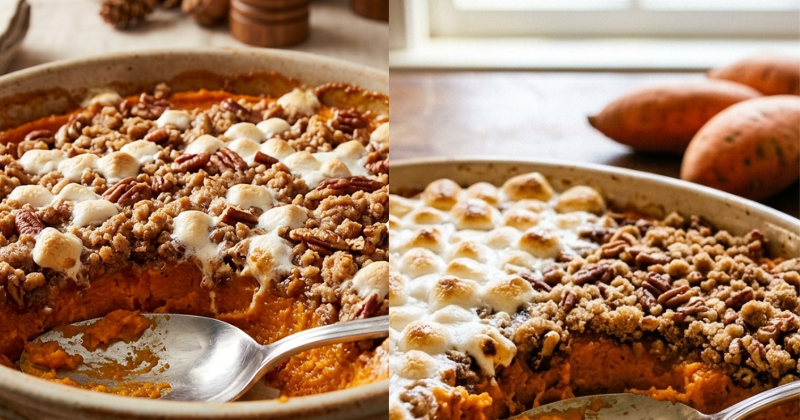
Most sweet potato casseroles are a sugary disaster. They belong on the dessert table, not next to a savory roast. When you drown naturally sweet tubers in corn syrup and top them with a mountain of marshmallows, you lose the earthy, complex flavor that makes sweet potatoes great. Worse, most recipes result in a mushy, water-logged texture because the potatoes are boiled rather than roasted.
The problem is the moisture. Boiling introduces water into the cell structure of the potato, ensuring your casserole will be a soggy mess by the time it hits the oven. If you’ve ever had a casserole « weep » liquid onto the plate, that’s why. This guide solves that. I’ve tested dozens of variations, and the secret to a savory, crowd-pleasing dish isn’t adding more sugar—it’s balancing the natural glucose with salt, fat, and heat. We are fixing the « mush » factor once and for all.
The « Hero » Technique: The Triple-Dehydration Roast
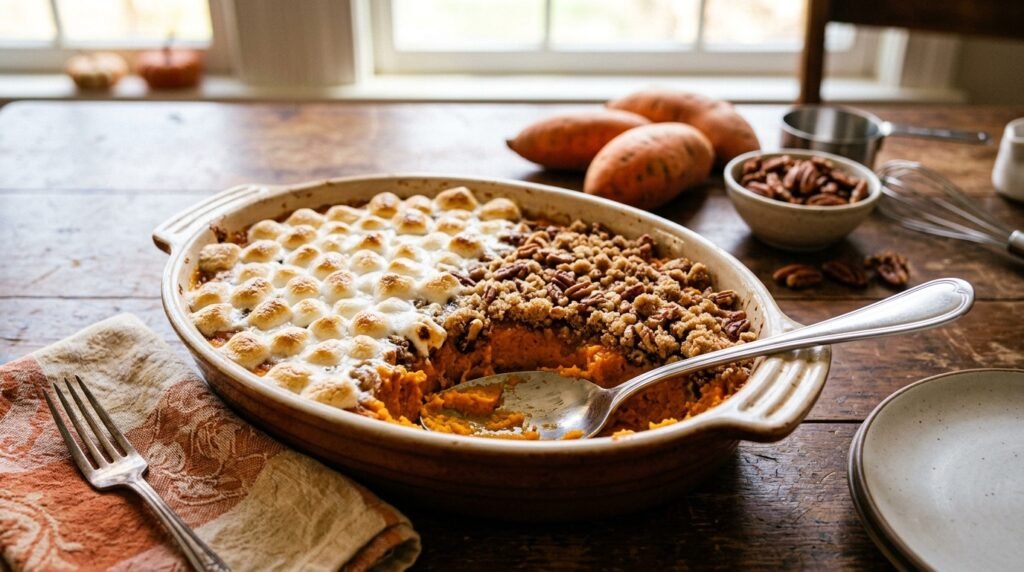
To beat the top-ranking recipes on Google, we aren’t boiling. We aren’t even steaming. We are using The Triple-Dehydration Roast.
By roasting the sweet potatoes whole in their skins at 400°F before mashing, we achieve two things. First, the high heat triggers the Maillard reaction inside the skin, caramelizing the natural sugars without adding a single grain of white sugar. Second, it allows excess moisture to escape as steam through the skin.
When you finally peel and mash these potatoes, the starch is concentrated. This creates a dense, velvety base that stands up to the additions of butter and cream without turning into soup. Most recipes skip this because it takes an extra 45 minutes, but the difference in structural integrity is undeniable. You want a casserole you can slice, not one you have to serve with a ladle.
Ingredient Deep Dive: Why These Work
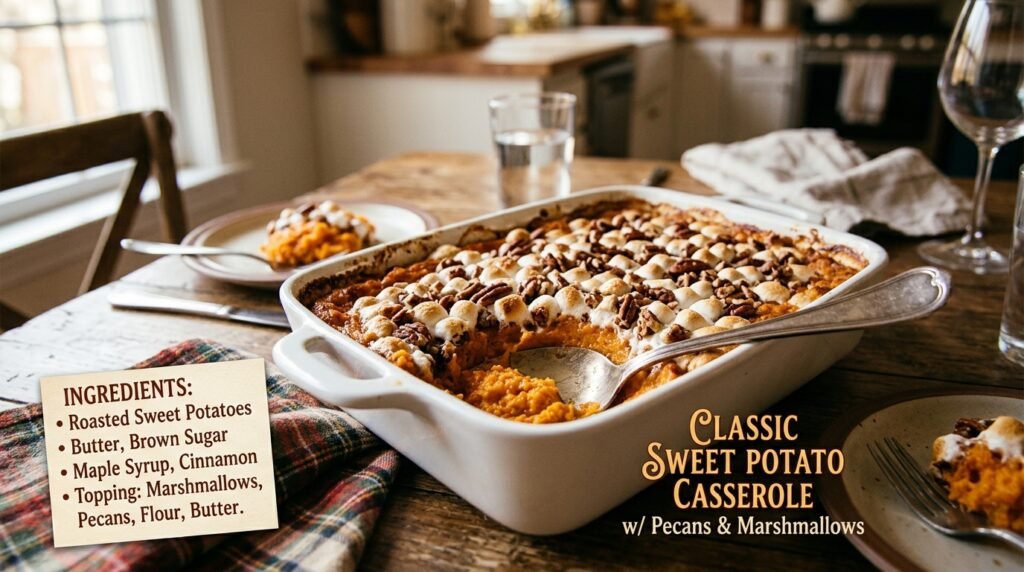
Don’t grab whatever is in the pantry. If you want professional results, you need specific chemistry.
- Jewel or Beauregard Sweet Potatoes: Avoid « Yams » (which are often drier and starchier). You want the deep orange flesh of a Jewel potato for the highest natural sugar content.
- Diamond Crystal Kosher Salt: Do not use table salt. Table salt is densly packed and will over-salt the dish. Diamond Crystal has a hollow flake that melts into the mash evenly.
- Kerrygold Unsalted Butter: This dish relies on fat for mouthfeel. European-style butter has a higher butterfat content and lower water content than standard store brands.
- Fresh Sage and Thyme: Dried herbs taste like dust here. Fresh sage fried in the butter provides a peppery, savory counterpoint to the sweetness.
- Full-Fat Mascarpone: Instead of heavy cream, we use mascarpone. It provides a thick, creamy tang that cuts through the sugar and acts as a stabilizer so the casserole holds its shape.
The Walkthrough: Step-by-Step
Phase 1: The Prep (Building the Base)
- Scrub and Poke: Wash 4 lbs of sweet potatoes. Pierce the skins deeply with a fork at least six times per potato. This prevents « potato explosions » and allows steam to vent.
- The Dry Roast: Place them directly on the oven rack with a sheet pan on the rack below to catch any drips. Roast at 400°F for 45-60 minutes.
- The Visual Cue: The potatoes are ready when they look slightly deflated and dark syrup begins to ooze from the fork holes. They should feel completely soft when squeezed with a kitchen towel.
Pro-Tip: The Peel Hack
Don’t struggle with a peeler. Let the roasted potatoes sit for 5 minutes. The skins will loosen and can be pulled off by hand like a glove.
Phase 2: The Cook (The Savory Mash)
- The Brown Butter Infusion: In a small saucepan, melt 1/2 cup of Kerrygold butter. Keep it on medium heat until it stops bubbling and begins to smell like toasted hazelnuts. Immediately toss in 10-12 fresh sage leaves. They will crisp up in seconds. Remove from heat.
- The Combine: Place the warm potato flesh in a large bowl. Add the browned butter (and the crispy sage), 1/2 cup of mascarpone, 2 teaspoons of Diamond Crystal Kosher salt, and 1/2 teaspoon of cracked black pepper.
- The Texture Check: Use a hand masher, not a food processor. A food processor will break the starch molecules and turn the potatoes into glue. You want a few small, rustic chunks for texture.
Pro-Tip: Temperature Matters
Make sure your mascarpone is at room temperature before adding it. If it’s cold, it will seize the butter and create lumps in your mash.
Phase 3: The Finish (The Savory Crust)
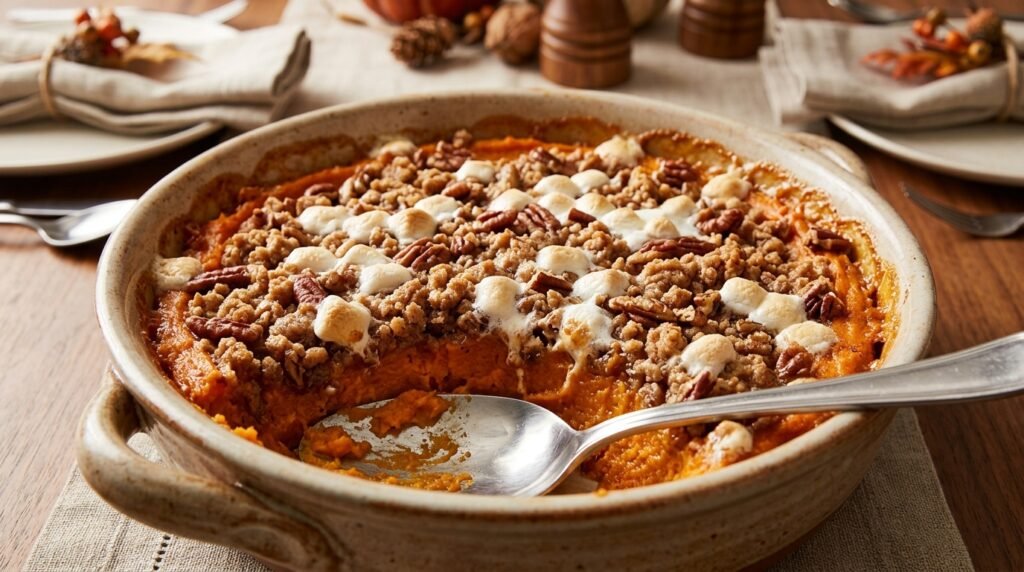
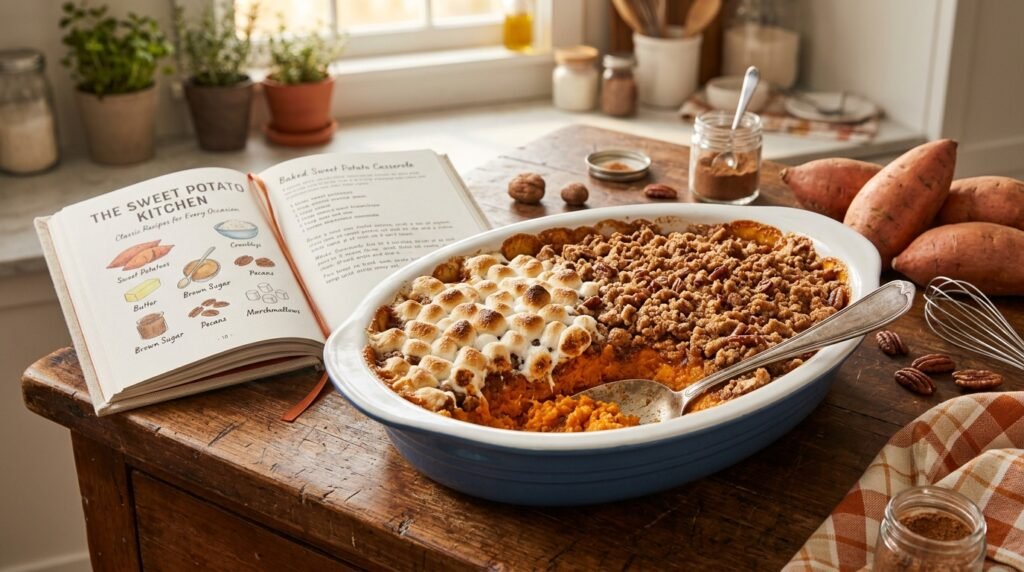
- The Assembly: Spread the mixture into a 9×13 ceramic baking dish. Smooth the top, then use a spoon to create « swirls » or peaks. These peaks will catch the heat and turn crispy.
- The Topping: Mix 1 cup of chopped pecans, 1/2 cup of panko breadcrumbs, and 2 tablespoons of melted butter. Sprinkle this over the top. The panko is essential—it provides a crunch that pecans alone cannot achieve.
- The Final Blast: Bake at 375°F for 20 minutes.
- The Visual Cue: The edges of the potato mash should be bubbling, and the panko should be a deep golden brown.
Pro-Tip: The Salt Finish
Sprinkle a pinch of Maldon flaky sea salt over the top the moment it comes out of the oven. It makes the savory notes pop.
Troubleshooting Table
| What Went Wrong | How to Fix It Next Time |
| Casserole is runny/liquid at the bottom. | You likely boiled the potatoes or didn’t roast them long enough. Ensure they are « deflated » before peeling. |
| The texture is gummy or « glue-like. » | You over-worked the potatoes. Avoid blenders or food processors; use a manual masher or a ricer. |
| The topping is burnt but the center is cold. | Your oven is running hot. Tent the dish with foil for the first 10 minutes of the final bake, then remove it to brown the top. |
| The dish tastes bland despite the salt. | Add a teaspoon of apple cider vinegar. Sometimes the « flat » taste is a lack of acidity, not a lack of salt. |
Storage & Reheating
Storage: Do not leave this dish at room temperature for more than 2 hours. Transfer leftovers to an airtight glass container. Plastic can trap steam and make the topping soggy. It will stay fresh in the refrigerator for up to 4 days.
Reheating: Never use the microwave if you want to keep the texture. Place the desired portion in a small oven-safe dish. Cover with foil and heat at 350°F for 15 minutes. For the last 3 minutes, remove the foil and turn on the Broil setting to re-crisp the pecan and panko topping. Watch it closely; it burns fast.
Recipe Card Summary
- Prep Time: 15 Minutes
- Cook Time: 1 Hour 20 Minutes
- Total Time: 1 Hour 35 Minutes
- Yield: 8-10 Servings
- Equipment: Large sheet pan, 9×13 baking dish, manual potato masher, small saucepan.
7 Savory Sweet Potato Recipes Casserole You Need to Try Tonight starts with this master base. Once you have perfected the Triple-Dehydration Roast, you can swap the sage for rosemary, or add crumbled goat cheese to the mash for a sharper profile. This is the definitive version of the dish that finally earns its place as a savory side.