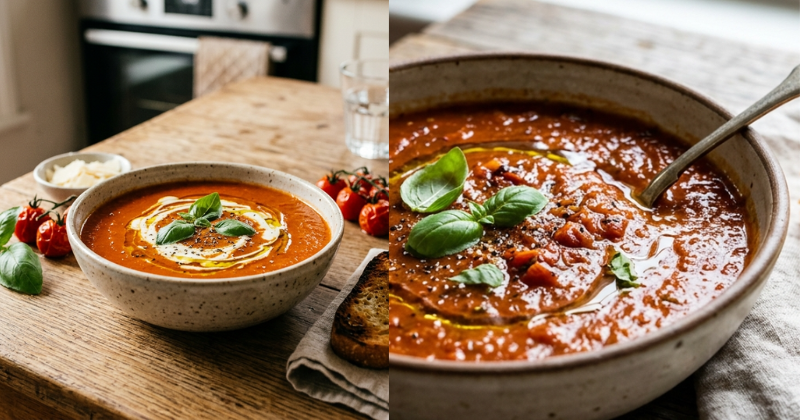
Stop Eating Bland, Watery Tomato Soup
Most homemade tomato soup is a disappointment. It’s either a thin, acidic mess that tastes like warmed-up juice or a heavy, flour-clogged bowl that hides the flavor of the fruit. The biggest mistake? Using flavorless out-of-season grocery store tomatoes and boiling them until they lose their soul. If your soup lacks depth, it’s because you’re missing the caramelization process that only a high-heat roast can provide.
I’ve spent over a decade in professional kitchens, and the « secret » isn’t a secret at all—it’s physics. When you simmer tomatoes in a pot, you’re just steaming them. When you roast them, you’re dehydrating the water and intensifying the natural sugars. These Easy Roasted Tomato Soup Recipes You’ll Want to Copy Now solve the « blandness » problem by utilizing a specific sheet-pan method that creates a concentrated flavor base before a drop of broth ever touches the pan. No more watery bowls. No more metallic-tasting canned shortcuts. Just pure, concentrated tomato essence.
The « Hero » Technique: The Maillard Sheet-Pan Roast
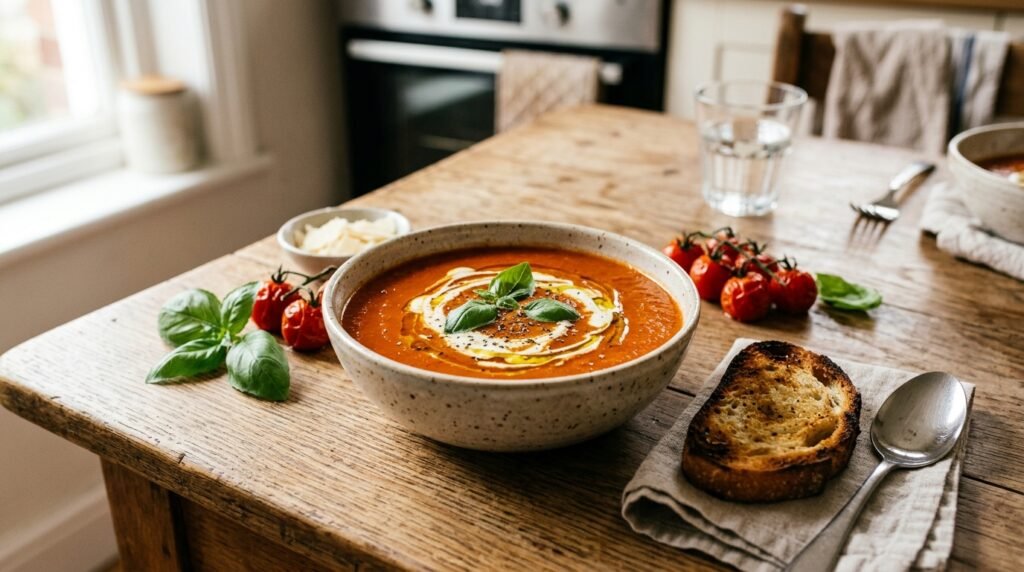
To beat the top-ranking recipes on Google, you have to stop treating your aromatics like an afterthought. Most recipes tell you to sauté onions and garlic in a pot while roasting the tomatoes separately. That is a mistake.
The hero technique here is the Unified Roast. We place the tomatoes, halved onions, unpeeled garlic cloves, and even the herbs directly onto a heavy-gauge rimmed baking sheet. By roasting the garlic inside its skin, you’re effectively confit-ing it in its own juices, preventing the bitter, acrid burnt taste that happens in a sauté pan.
More importantly, we are looking for the Maillard reaction. You want the edges of the onions to turn dark brown and the tomato skins to blister and char slightly. This char introduces a smoky complexity that mimics a slow-simmered sauce in a fraction of the time. This isn’t just « cooking » the vegetables; it’s a structural transformation of the sugars.
Ingredient Deep Dive: Why These Work
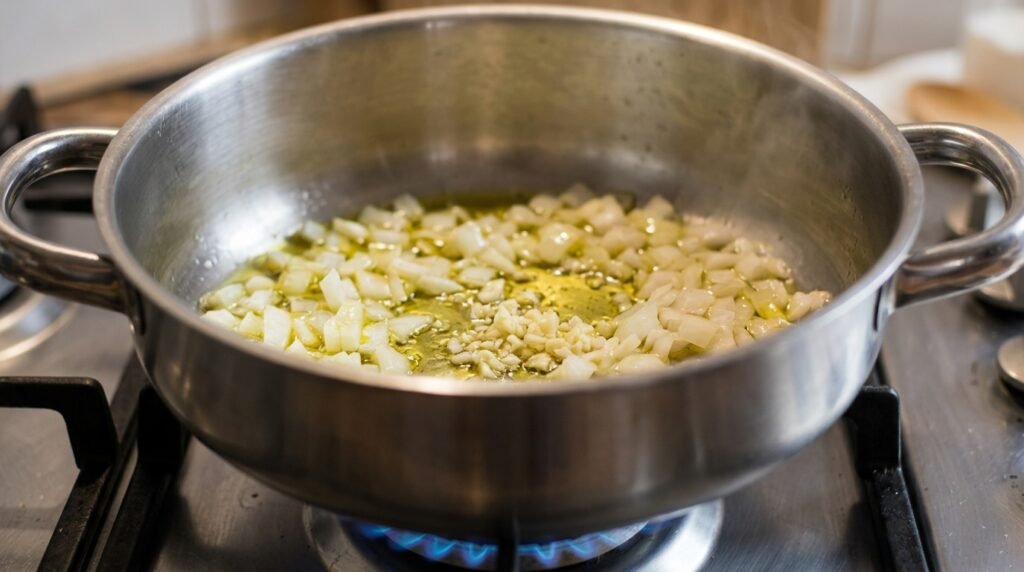
- Roma or San Marzano Tomatoes: Do not use beefsteak or heirloom tomatoes for this soup; they have too much water and too many seeds. Romas have a higher ratio of « meat » to juice, which results in a thicker, silkier texture without needing a roux or cornstarch.
- Diamond Crystal Kosher Salt: Use this specifically. If you use Morton’s or standard table salt, cut the measurement by half. Table salt is much denser and will turn your soup into a salt lick.
- High-Fat European Butter: We finish the soup with cold cubes of Kerrygold or similar high-fat butter. The higher fat content emulsifies better into the acidic tomato base, creating a velvet mouthfeel that olive oil alone cannot achieve.
- Fresh Thyme Sprigs: Do not use dried thyme. Dried herbs can feel « woody » in a blended soup. Fresh thyme tied in a bundle allows the oils to infuse during the roast, and the stems are easily discarded before blending.
- Smoked Paprika (Pimentón): Just a pinch. It bridges the gap between the roasted char of the vegetables and the sweetness of the onions.
The Walkthrough
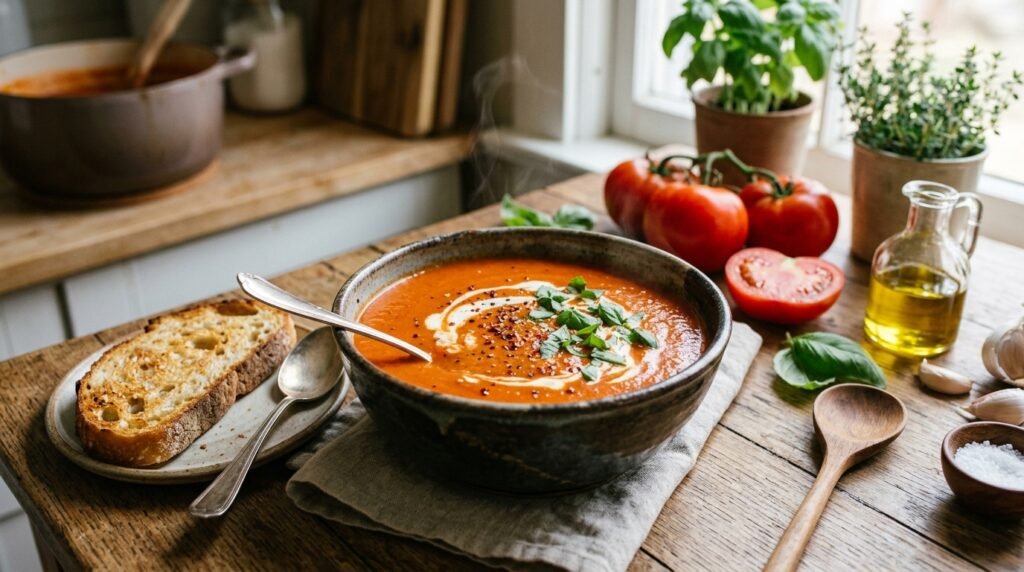
Phase 1: The Prep and The Roast
Preheat your oven to 400°F (200°C). While the oven heats, prep your vegetables. Cut 3 lbs of Roma tomatoes in half lengthwise. Peel and quarter one large yellow onion.
- Arrange the Sheet Pan: Place tomatoes cut-side up. Nestle the onion wedges and 6 unpeeled garlic cloves between them.
- Seasoning: Drizzle with 1/4 cup of extra virgin olive oil. Sprinkle 1 tablespoon of Diamond Crystal Kosher salt and a heavy crack of black pepper.
- The Roast: Slide the pan into the oven. Roast for 40 to 45 minutes.
- Visual Cues: Look for the tomato skins to shrivel and the tips of the onions to turn a deep, mahogany brown. The garlic skins should look papery and tan.
Pro-Tip: Use a heavy-duty stainless steel or aluminum baking sheet. Thin, non-stick pans will warp at 400°F and won’t distribute heat evenly enough to get that essential char on the bottom of the tomatoes.
Phase 2: The Extraction
Once the pan comes out of the oven, let it rest for 5 minutes.
- Garlic Prep: Squeeze the roasted garlic out of their skins directly onto the pan. The cloves should be soft like paste. Discard the papery skins.
- The Scraping: This is the most important part. Use a metal spatula to scrape every bit of the browned juices and « fond » off the bottom of the baking sheet. That brown glaze is concentrated flavor.
- Transfer: Move everything—the tomatoes, onions, garlic, and all the juices—into a high-speed blender or a heavy-bottomed Dutch oven if using an immersion blender.
Pro-Tip: If the juices have baked onto the pan and won’t budge, pour 1/2 cup of warm vegetable broth onto the hot sheet pan to « deglaze » it, then scrape. Don’t leave that flavor behind.
Phase 3: The Blend and Finish
Add 2 cups of high-quality vegetable or chicken stock to your roasted vegetables.
- The Blend: Process on high until completely smooth. If you want a truly professional, « restaurant-grade » texture, pour the mixture through a fine-mesh sieve (chinois) to remove any remaining seeds or skin fragments.
- The Simmer: Pour the blended soup into a pot. Bring to a gentle simmer over medium-low heat.
- The Emulsion: Turn off the heat. Stir in 2 tablespoons of cold butter and 1/4 cup of fresh basil leaves. The residual heat will melt the butter and wilt the basil without turning it bitter.
Pro-Tip: Never boil the soup after adding the butter or fresh basil. Boiling will break the emulsion and make the fresh basil taste like hay.
Troubleshooting: What Went Wrong?
| What Went Wrong | How to Fix It Next Time |
| Soup tastes too acidic/sour | Your tomatoes weren’t ripe enough. Add 1/2 teaspoon of granulated sugar or a splash of heavy cream to balance the pH. |
| Texture is grainy or « bitsy » | You didn’t blend long enough, or you skipped the straining step. Use a high-speed blender for at least 60 seconds. |
| Soup is too thin | You likely added too much broth. Next time, add broth in increments. For the current batch, simmer it uncovered for 15 minutes to reduce. |
| The flavor is flat/boring | You didn’t roast the vegetables long enough. You need that char. Add a teaspoon of balsamic vinegar or lemon juice to brighten it up now. |
Storage & Reheating
Do not leave this soup in the metal pot overnight; the acid in the tomatoes can react with the metal and create a tinny flavor.
- Storage: Transfer the soup to an airtight glass container (like a Mason jar or Pyrex). It will stay fresh in the refrigerator for up to 5 days.
- Freezing: This soup freezes beautifully because it contains very little dairy. Store in freezer-safe bags with the air squeezed out for up to 3 months.
- Reheating: Reheat in a small saucepan over medium-low heat, stirring frequently. If you use a microwave, cover the bowl with a damp paper towel to prevent splattering and stir every 30 seconds to ensure even heating. If the soup thickened too much in the fridge, whisk in a tablespoon of water or broth during the reheat.
Recipe Card Summary
- Prep Time: 15 Minutes
- Cook Time: 45 Minutes
- Total Time: 60 Minutes
- Yield: 4 Servings
- Equipment Needed: Large rimmed baking sheet, High-speed blender (or immersion blender), 4-quart Dutch oven or heavy pot, Fine-mesh strainer (optional but recommended).
Ingredients Quick-List:
- 3 lbs Roma Tomatoes
- 1 Yellow Onion
- 6 Garlic Cloves
- 1/4 Cup Extra Virgin Olive Oil
- 1 tbsp Diamond Crystal Kosher Salt
- 2 Cups Vegetable Broth
- 2 tbsp Cold Unsalted Butter
- 1/4 Cup Fresh Basil leaves
This method ensures a deep, complex flavor that outperforms any stovetop-only version. Stop settling for average soup and start roasting.