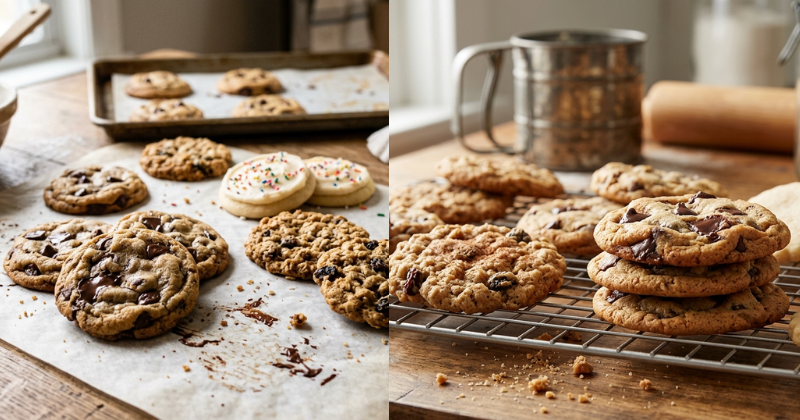
Stop Making Flat, Flavorless Cookies
Most home-baked sugar cookies fail because they are either cloyingly sweet or structurally weak. You’ve seen it: you spend hours chilling dough, only for the cookies to spread into a greasy puddle the second they hit the oven heat. Or worse, they come out looking like a professional bakery item but taste like flour and cardboard.
The secret to 11 Genius Sugar Cookie Recipes That Taste Like a Professional Bakery isn’t a secret ingredient; it’s a fundamental understanding of fat-to-flour ratios and temperature control. High-end bakeries don’t just « mix and bake. » They account for protein content in flour and the moisture levels in European-style butter. If your cookies are coming out bland, it’s likely because you’re using standard table salt or cheap vanilla extract that evaporates during the bake. This recipe fixes the « bland and blurry » cookie problem by focusing on structural integrity and a balanced flavor profile that relies on salt and acidity to cut through the sugar.
The « Hero » Technique: The Cold-Emulsion Method
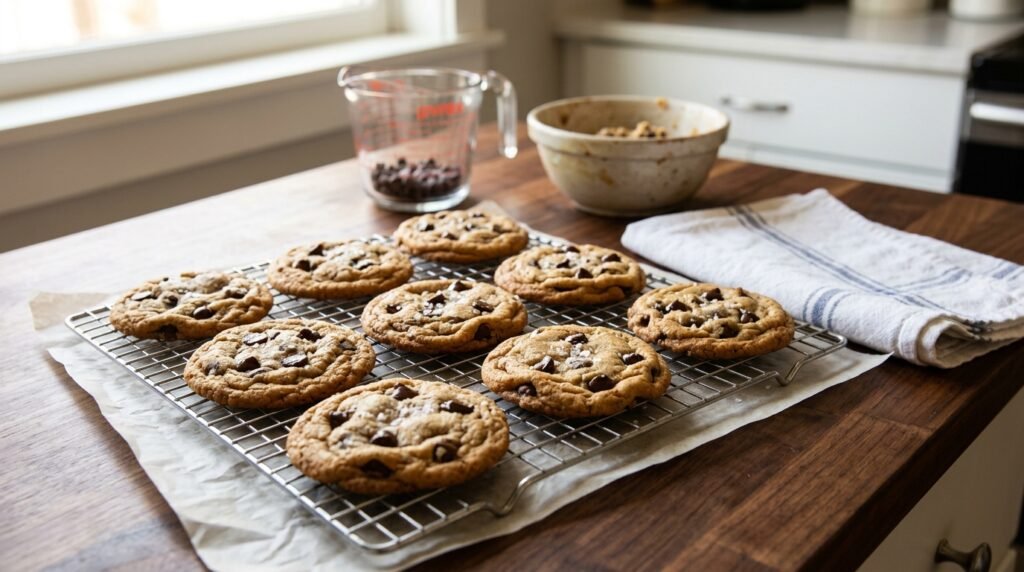
Standard recipes tell you to « cream butter and sugar until fluffy. » This is where most people fail. Over-creaming incorporates too much air, causing the cookies to puff up and then collapse, creating those dreaded ripples.
We use the Cold-Emulsion Method. Instead of using room-temperature butter (which is often too warm at 70°F), you want your butter at exactly 60°F. It should be pliable but still feel cool to the touch. By beating the sugar into cooler butter, you create a dense, stable emulsion.
Why this works: When the cold fat hits the hot oven, it takes longer to melt. This gives the flour’s starches and proteins time to set their structure before the fat can spread the dough across the pan. The result is a cookie that holds its exact shape—essential for decorating—while maintaining a melt-in-your-mouth interior.
Ingredient Deep Dive: Choose Wisely
If you want a bakery-quality result, you cannot use grocery-store staples blindly.
- King Arthur All-Purpose Flour: Use this specifically for its consistent 11.7% protein content. Lower-protein flours (like store brands) lead to a fragile cookie that breaks when you pick it up.
- Diamond Crystal Kosher Salt: Do not use table salt. Table salt is dense and metallic. Diamond Crystal has a hollow flake that dissolves instantly and provides a clean « pop » to the sugar without making the cookie taste salty.
- Clandeboye or Plugra Butter: Use a European-style butter with 82-84% butterfat. Standard American butter has higher water content, which creates steam and causes—you guessed it—more spreading.
- Vanilla Bean Paste: Swap out liquid extract. The paste provides those aesthetic black specks and a deeper, resinous flavor that survives the 350°F heat of the oven.
The Walkthrough
Phase 1: The Base & Emulsion
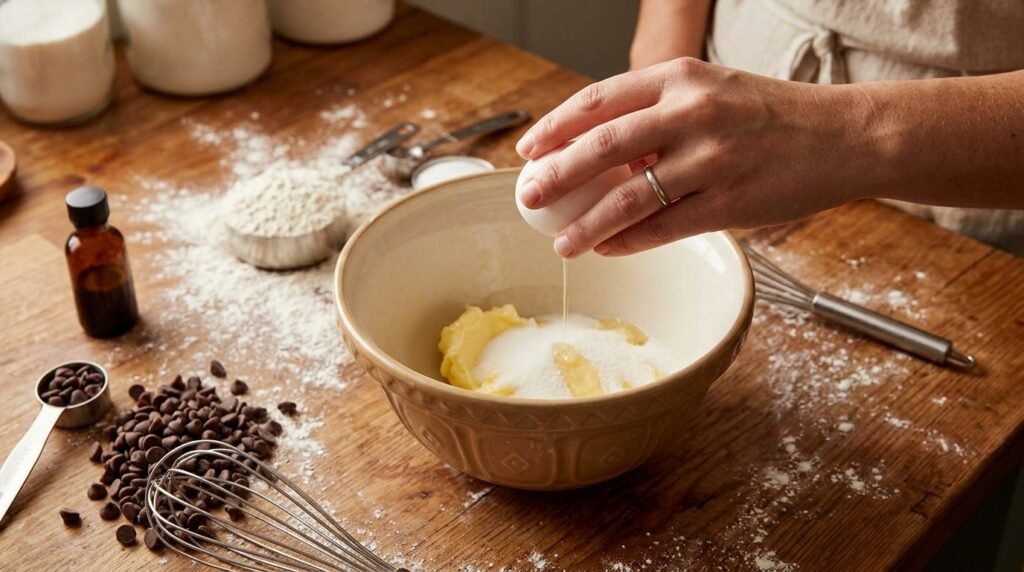
- Prep the Fat: Cut your 60°F butter into small cubes. Place them in the bowl of a stand mixer fitted with the paddle attachment.
- The Mix: Add the granulated sugar and mix on medium-low speed for exactly 3 minutes. Do not look for « white and fluffy. » Look for a texture that resembles wet sand.
- Binding: Add one large egg (straight from the fridge) and your vanilla bean paste. Mix until just combined.
Pro-Tip: Scrape the bottom of the bowl with a silicone spatula after adding the egg. Butter often hides at the very bottom and prevents a uniform dough.
Phase 2: Incorporating Solids
- Whisk the Dry: In a separate bowl, whisk the flour, salt, and a 1/2 teaspoon of cream of tartar. Do not use baking powder if you want a sharp-edged cookie; baking powder causes leavening that rounds out the corners.
- The Low-Speed Fold: Turn the mixer to the lowest setting and add the flour in three stages. Stop the mixer when you still see a few streaks of white flour.
- The Hand Finish: Finish the mixing by hand with a spatula. This prevents overworking the gluten, which makes cookies tough.
Pro-Tip: If the dough feels sticky, do not add more flour. Instead, wrap it in plastic and chill it for 15 minutes. This allows the flour to fully hydrate.
Phase 3: The Bake & Finish
- Rolling: Roll the dough between two sheets of parchment paper to exactly 1/4 inch thickness.
- The Flash Chill: Place the rolled sheet of dough in the freezer for 10 minutes before cutting your shapes. Cold dough cuts cleaner.
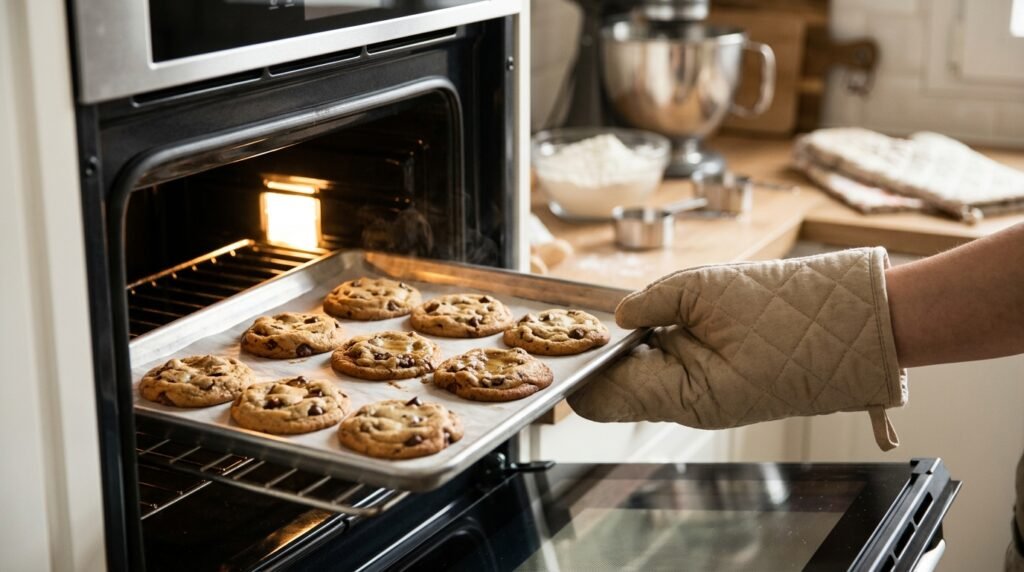
- Baking: Bake at 350°F on a heavy-gauge aluminum sheet. Avoid thin, dark non-stick pans as they scorched the bottoms.
Visual Cue: The cookies are done when the centers no longer look « wet » or shiny, but the edges have zero browning. A golden edge on a sugar cookie means it will be crunchy and dry once cooled.
Troubleshooting Table

| What Went Wrong | How to Fix It Next Time |
| Cookies spread and lost their shape | Your butter was too warm or you over-creamed the sugar. Keep the butter at 60°F. |
| Tough, « bread-like » texture | You overworked the dough after adding flour. Mix until just combined. |
| Gritty mouthfeel | The sugar didn’t dissolve into the butter emulsion. Ensure you mix the butter and sugar for the full 3 minutes. |
| Bottoms are too dark | Use a silicone baking mat (Silpat) or double-stack your cookie sheets to insulate the heat. |
Storage & Reheating
Sugar cookies are highly susceptible to picking up « fridge smells » due to their high fat content.
- Short Term: Store in a heavy-duty glass container with a locking lid. Plastic containers are porous and can transfer flavors. They will stay fresh for 5 days at room temperature.
- Long Term: These freeze exceptionally well. Wrap individual cookies in plastic wrap and place them in a freezer bag for up to 3 months.
- The Refresh: If the cookies lose their snap, place them on a wire rack in a 300°F oven for 4 minutes. This draws out any surface moisture and crisps the butter back up.
Recipe Card Summary
- Prep Time: 20 Minutes
- Chill Time: 25 Minutes
- Cook Time: 10-12 Minutes per batch
- Yield: 24 Medium Cookies
- Equipment Needed: Stand mixer, heavy-gauge aluminum baking sheets, parchment paper, rolling pin with thickness rings.
Core Ingredients: 227g European Butter, 200g Granulated Sugar, 1 Large Egg, 1 tbsp Vanilla Bean Paste, 400g All-Purpose Flour, 1 tsp Diamond Crystal Kosher Salt.
Instructions:
- Cream butter and sugar (60°F) for 3 mins.
- Add egg and vanilla.
- Fold in whisked dry ingredients.
- Roll to 1/4 inch between parchment.
- Flash chill for 10 mins.
- Cut and bake at 350°F for 10-12 mins until matte.